Tuesday, 26 July 2016

How to Take Care of your hair after Hair Transplant Surgery?

Hair Transplant
Post hair transplant surgery one needs to take good care of the hair to heal and look healthy naturally! Let’s read below in detail of the steps to be considered.
You may experience selling or soreness on the scalp after the anesthesia comes down, taking a pain killer with paracetamol will help.
It is normal to feel tight, pink or itchy on the scalp. This is because the donor hair implanted will form crusted small scabs which will fall off in a few days.
It occurs that the newly transplanted hair is shedding, fret not as this usually occurs and is called “thermal shock”. Thermal shock is when intense heat is given on a hair follicle and is destroyed. But that does not affect stem cells which were transplanted. What happens is that some follicles and grafted hair fall out but stem cell remains, which enable new hair follicles to grow.
You will be advised on washing and shampooing scalp with the use of antibiotics.
Other these general instructions given by the surgeon which should be followed are:
  1. Avoid any form of driving as you will be given a sedative prior to surgery which helps in making you relax. As this takes it own time to wear off it is hazardous to drive a car or attempt any form o such tasks.
  2.  In case of a micro graft then a bandage that compresses will be wrapped around the head which resembles the “turban”. This must remain in place for a day or 2 and should be kept away from moisture. Hair transplants involve stitches which will dissolve with time but you need to visit the clinic in 2 weeks time to remove them.
  3. Avoid alcohol for the first 48 hours of surgery, in case you smoke then do not smoke up to a month. Smoking disturbs blood flow to the hair follicles which is vital for hair growth.
  4.  After surgery sleep in a semi upright position, with the help of many pillows, elevate your head. 
  5. Avoid touching at the newly grafted areas. If you rub them the hair follicles will break and fall out leaving no chance for new hair growth.
  6. A special lotion in the form of a spray may be given to use at home. Spray it on areas which have new hair grafted as it will aid the hair to grow.
  7.  Hair can be washed after a few days of surgery which will prevent scabbing and remove the dead skin. 
  8. In case of swelling or bleeding in the first week, use an ice pack to reduce it. But DO NOT place this on the grafted area. Place it on your forehead or at the back of your head.
  9.  Avoid all forms of exercise and playing sports. Try to avoid blowing the nose harshly and avoid leaning forward.
  10. Avoid exposure to the sun, in case you need to step out then wear a hat.
  11. By following these steps one can be assured of healthy hair growth post a hair transplant surgery


Monday, 25 July 2016

How to Speed Up Hair Growth after a Hair Transplant

Let’s admit the fact that many now a days face hair balding due to enormous amounts of hair loss. Hair loss from health issues, poor nutrition and other surgical processes may take its own time to resolve but there are other types of hair loss issues such as male pattern balding which causes permanent loss of hair. Hair transplant is a surgical cure that can help in eliminating bald patches of the scalp. But along with this one needs to take good care of hair post a transplant to increase chances of successful results and to promote faster hair growth. Below listed are some steps that needs to be followed. Let’s read them in detail.
Hair Growth after a Hair Transplant
Step 1
Remember to treat the scalp gently post hair transplant. If any medication is prescribed by the doctor then use minimal pressure in order to avoid any kind of disturbance of sections in the transplanted hair. Wait for doctor‘s advise in shampooing of hair. Then use a gentle shampoo to cleanse the hair follicles area carefully. Use a light hand and avoid any vigorous movements. Gently rinse the hair and avoid strong water pressure. Pat your scalp dry with a soft towel.

Step 2

While the scalp is healing keep your hands away from itching or scabbing the transplanted hair. Say no to harsh hands and also excessive hair massages.

Step 3

Cut down on activities post hair transplant. Avoid activities like jogging, cycling and sports for a week or 10 days. This period of time the hair transplanted needs rest from falling out of the scalp. Avoid any form of gymming and exercise routines.

Step 4

Watch what you eat! Consuming a balanced diet that contains a good variety of healthy foods is very important. Eating foods rich in anti oxidants like blueberries, peppers, tomatoes, cherries and squash is essential. Consume plenty of protein rich foods that will help in hair growth. Drink at least a liter of water daily. Stay hydrated.

Step 5

Check with the doctor if you are allowed to take any scalp massages, if yes then go for a gentle scalp massage in and around the transplanted hair. Use essential oils from herbs that can aid hair growth. You can always ask the doctor to prescribe oil that will suit your hair needs.

Step 6

Ask your doctor if usage of monoxidil can help in faster hair growth. According to research this one is a wondrous potion for healthy hair growth post hair transplant. Apply it on the clean scalp as per doctors’ instruction and recommendation. Post usage of monoxidil remember to wash your fingers well.
Remember to follow these above mentioned steps to speedup hair growth post a hair transplant. Taking good care after a hair transplant is very essential. One could face hair fall of the hair transplant done if one ignores to take care! So which is your favorite step to take care of hair growth post a hair transplant?

Monday, 18 July 2016

Hereditary pattern baldness and the Scar Treatment

Hereditary pattern baldness has left most of us in worry and sometimes it gets too late when the dawn of reality strikes. Most of us go for professional treatment to get a permanent solution. With the advancement of technology, hair restoration through hair transplants has become more common among the masses. Although most of us know what hair transplant is, how it works and the post-surgery care, there is still a lot of confusion around it when it comes to scars.

Most of us who have suffered a head injury or has a scar from birth wonder if the miracles of hair transplant work on you or not. Living in this day and age, with new technologies coming up at the crack of the dawn, it is not much of a surprise for hair transplant to be possible when it comes to scar. So, it shouldn’t be much of a worry for all those peeps out there. However, to get that constant worry out of your way, here are some common queries people have about transplanting onto a scar cleared.

Baldness & Scar Treatment
For those who have already had a hair transplant and looking for the options of cloning later might get worried about the scar from the surgery. Well, if the scar hasn’t thickened, the cloned hair will grow just fine. However, if the hair is transplanted into widened scar, the hair growth will be stunted.Many opt for scalp reduction surgery before a transplant. However, the scar becomes a concern before going ahead with the transplant. As mentioned, hair growth will not be a problem however; the problem is abnormal hair direction rather than the scar. If hair is transplanted adjacent to the scar in direction which can lie onto the scar area, the visual effect of the scarring can be reduced. The improvement however depends on the surgeon’s skills and the hair available for transplant.It is common for people who opt for face lift to lose hair. If it is cosmetically an issue, a localized hair transplant can be opted on the scar and around the thinning areas. Nonetheless, more than one session may be required. When transplanting onto a scar, it is a normal procedure once the area is numbed. Traumatic scars can treated with follicular unit hair transplantation but it requires several sessions. The surgery can make the bald spot invisible but the underlying scar tissue will still be there.

In case of thickened scar, it is first flattened through medications by the surgeon before performing the surgery which has the same procedure as in case of no scars. However, the few things should be kept in mind
  • Blood supply of the scar tissue is less than a normal one, so the grafts shouldn’t be placed too close.
  • When these grafts grow, new blood vessels are formed around the area.
  • More density can be achieved by subsequent session.
  • After the procedure, a proper care is a must since the scarred area doesn’t hold onto to the grafts like the normal tissue and can be easily displaced.

These are the major areas of curiosity and worry when people with scar opt for hair restoration. To know more about the procedure, it is advised to contact the best hair transplant clinic in India

Hair Transplantation - Advantages & Disadvantages

For many reasons, not everyone is blessed with thick and lustrous hair. Irrelevant of gender, hair type and status one can succumb to baldness. Baldness can be a threatening situation and deter someone’s confidence. One solution to reverse baldness is to opt for hair transplantation. But it’s always advised that one knows in and out of the procedure. Let’s read in detail below.
Hair Trasplantation Advantages & Disadvantage

What is the procedure?

  • It is a surgical process in which the hair follicle is put on to areas of partial and complete hair loss.
  • The hair is taken from the back of the head and added on to areas of baldness.
  • It works well in treating baldness that is caused by factors that are hereditary.
  • It is done with almost no use of sedation and it has 2 techniques
    1. Strip harvesting
    2. Follicular unit extraction

Advantages of hair transplantation

  • Since it is a medically treated technique there is no need of any other form of hair growth. The hair implanted will continue its growth.
  • Since you yourself are the donor it is a big advantage.
  • It gets done in a single go.
  • Usually no money or very little money is considered as consultation fee, so keeping in mind the fact that it’s not expensive is a big relief.
  • Hair transplantation is very effective than any other artificial treatment.
  • In case one is sensitive to losing consciousness the process can be managed by partial anesthesia.
  • Another big advantage is that hair transplantation provides uniformity in hair distribution. The technique works on optimization for overall distribution of follicles and it remains intact.

Disadvantages of hair transplantation

  • This is a physiological disadvantage, one should always remember that a sizeable portion of the dermis is extracted or implantation purposes. The scalp gives protection to the follicle from any kind of trauma and so the follicles tend to become more susceptible to cases where a good portion is removed.
  • In case of dense packing then it leads to be more expensive and consumes plenty of time along with more number of sessions.
  • Cases involving thick packing can lead to scarring and injuries.
  • In case of thick packing, can lead to injuries and scarring.
  • Because of exposure to many medicines and injury a graft planted will not survive and it results in wastage of money and time.

Cost factors of hair transplantation

  • Hair transplantation becomes a costly affair with the number of grafts made.
  • Factors like hair loss stage, donor hair availability and levels of expectation determine the cost.
  • Price needs to be paid for the repair surgery too.
  • Recently the trend is that many clinics offer free cost of advice for consultation of hair transplantation.
  • Though cost factors are involved, its longevity and restoration’s look can be worth every penny spent.

Details of Hair Transplant

Are you facing hair loss? Has it become a constant reason to your worries? Fret not! Hair transplant is here to solve all your issues and bid good bye to your worries. For men who are facing serious balding issues a hair transplant is a promise to regain all the lost hair and it will seem good and look natural. We all have heard of hair transplant.  Haven’t we? But what exactly is it? And who can go though it? What should be the age criteria? Let’s read in detail.
                  When there are bald spots and patches on the scalp that shows sign of dead follicles on the scalp which don’t grow anymore. And sadly technology hasn’t advanced so much that dead follicles can naturally grow back. So such times hair transplant is an ideal solution.


Hair Transplant


Hair Transplant – What is it?
The best part about this process is that it just takes about a day and the results are that you will get natural and healthy growing hair which needs no special maintenance and you don’t need to compromise on your looks and feel conscious!  It is a special type of surgery performed by qualified doctors with the best techniques.

The Procedure-
Hair transplant is a treatment of hair in which hair is extracted from the roots till the back of the scalp. If a bald person looses hair then it’s planted there for hair to grow back. What about the back area? Fret not the back hair of the head will not go bald due to hair extraction since our genetics in the human body allows it to re grow throughout life.

What is the ideal age to undergo a hair transplant?
A person as young as 21 years of age can undergo hair transplantation. A reputed hair restoration clinic with qualified hair specialists should be chosen like I Graft global hair services, it is best to leave the decision making of age to them as they have good experience in such decision making. It is said that there have been examples of men as old as 80 years of age too can choose hair transplant. So age is basically not an issue when it comes to hair transplant.
Hair transplant is a branch of cosmetics and aesthetic surgery in which skilled hands and creative thinking is what is of prime importance. It’s not a joke and is considered as an art as you are restoring someone’s natural looks. So choosing I graft global hair services is a big advantage in your kitty. Since they have branches in eastern, western, northern and southern India one can easily access their centre’s and get a hair transplant.

At i-graft global services have a high number of successful stories that can leave you with a positive feeling and also assuring you the best of services. Their main aim is to make the clients happy with good results.


Changing trends in hair restoration surgery

For people who suffer from hair loss, surgery and transplant is a priority. The market has planet of clinics and treatment that it can offer. But one can be confused as to choose what and if they need to wait for longer for any new methods to come up! Hair restoration therapy has evolved in a big way over the last few years. Plenty of techniques have been developing over the years .Lets read below in detail of its development.

Restoration Surgery

Types of hair loss
Androgenetic alopecia
This is a common form of hair loss in men and women and it occurs with age. Medication for this includes finasteride and minoxidil. Daily dosage of these medicines will help in growth of hair follicles. The results cosmetically of surgical treatment for androgenetic alopecia are usually satisfactory.
Follicular unit transplant
Follicular unit transplantation lets the surgeon to transplant the maximum number of hair with least non hair bearing scalp. With various sessions number of grafts can be moved safely and the transplant can appear natural.
Follicular unit extraction
 This is hair transplantation where there are no permanent scars, heals easily in a short time. FUE is helpful for those with a very tight scalp and who have healed poorly with a traditional strip harvesting before.
Robotic hair restoration
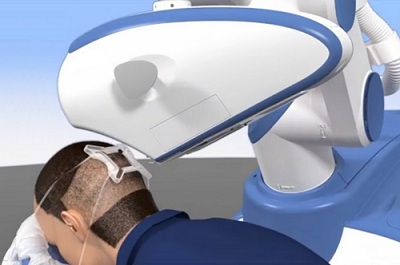
This is a technique where cameras are used and robotic arms assist the surgeon for hair restoration. This method harvests follicular units in both men and women. The disadvantage of this method is the punches made are very large and in comparison with FUE, FUE method fares better.
Strip method
The ones who suffer from male pattern baldness, female pattern baldness and who wish to correct any prior hair transplants can opt for strip method. Strip method is a less expensive way of treating baldness. This is a method of getting follicular units from a donor strip which is taken from a non balding side of the head. The grafts are removed with the help of microscopes and then transplanted on the bald and thinning areas of the head and is performed under local anesthesia.
Future of hair transplant
Research in hair transplant says that stem cell therapy and Prostaglandin therapy will mark as the future of in treating hair transplant.
Stem cell therapy
Stem cell therapy helps those who have no hopes for new hair growth. In this method the follicles will be re activated to retain stem cells within the bulge areas. Gene therapy can help in re activating follicles easily.
Prostaglandin therapy
Latest discovery says that prostaglandin helps in hair growth; it could also increase eyelash growth. Since research is happening currently on this topic there is very little data about prostaglandin therapy.
With time science will improve and there will be many methods that will help in hair restoration. Doctors and researchers are on a constant run and working like a machine to figure out newer and faster techniques.

All you want to know about Children’s Alopecia

Did you know that children face hair loss? Though not of a common occurrence but a close number of 2 million children suffers from hair loss also called Alopecia. It is of a major concern for a parent when their own child faces hair thinning or develops bald spots and further faces alopecia. But there the good news is that 60% of children who have Alopecia always outgrow this condition without any need of treatment.

Children's Alopecia
With Alopecia a complete restoration and reversal of hair is time consuming, the duration of time is about a year and sometimes more than that. However for many and mostly majority of children the issue will resolve on its own. But 40% of children are not as lucky as others. This is frustrating for parents and the child is usually affected for an overall appearance and can lead to a lot of embarrassment.
Children who suffer from hair loss should be taken to the general practitioner, pediatrician or pediatric dermatologist for the problem to be diagnosed and to take further treatments as prescribed.
Alopecia areata is an issue of hair loss that is caused by the body’s immune system that attacks hair follicles. The characteristics are of a sudden appearance of oval or round patches of hair loss on the scalp. These patches are smooth or slick without broken hair. Say about 25% of children with this condition face pitting and nail ridges.  
In younger children treatment consists of strong corticosteroid ointments or creams which can be applied to the bald areas. For teenagers steroid injections are injected onto the scalp. Minoxidil is also used in addition to regular steroid treatment.
Researchers don't know what causes alopecia areata, but genetics plays a role. One in five people with the disorder has a family member who has it, too. It's also more common in families with a history of asthma, hay fever, atopiceczema, childhood diabetes, or other autoimmune diseases.
It's possible that an outside factor, like a viral illness, may trigger the condition. While hair loss is often attributed to stress and nervous conditions, alopecia areata isn't caused by stress.
Causes for alopecia areata is still unknown, research is still going on. It is said that genetics play a huge role. Also one in five people with this disorder has a family member who has it.  It is observed that is common in families who have a history of asthma, hay fever, eczema which is atopic, diabetes since childhood or other auto immune diseases. There are few chances of outside factors like illness through viral infection can trigger this condition more. Though hair loss is usually related to stress and nervous conditions, alopecia areata is not caused by stress.
We always have to remember that hair loss in children is not because of vitamin deficiency, unless in cases of extreme malnutrition, usage of tight headbands, poor scalp circulation, wearing tight hats or exposure to extreme cold weather. The process of diagnosis is as simple as a test of evaluation and the risk factors of a visual examination of which the doctor will perform.